 How to resolve AdBlock issue?
 Waves eMotion LV1 V17
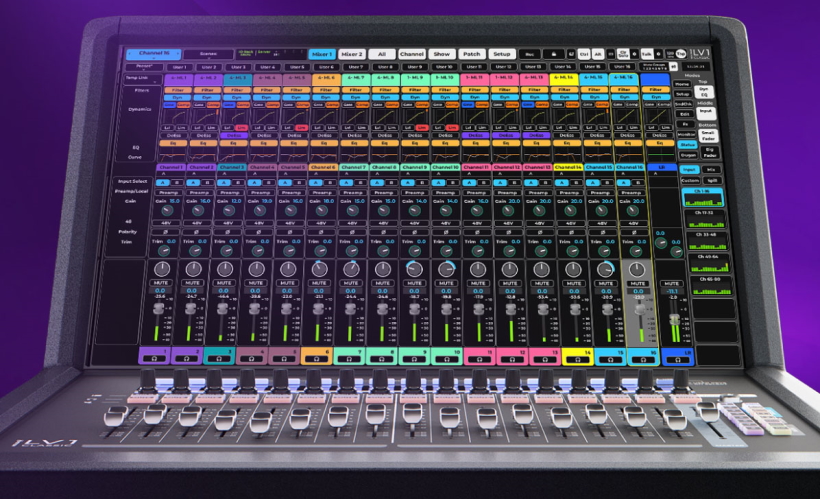
Waves Audio, a developer of professional audio solutions for both live and studio sound, has announced the release of eMotion LV1 Version 17, among the most significant software updates in the history of its LV1 digital live mixing platform. The update introduces a refreshed user interface, more flexible mixer layouts, expanded tactile control and numerous workflow enhancements that make live mixing faster, easier and even more intuitive. The update is available for users of LV1 mixers including the LV1 Classic mixing console.
Since its introduction, eMotion LV1 has provided engineers with a flexible live mixing platform that can be configured around individual workflows. LV1 v17 builds on that foundation with updates throughout the interface designed to simplify navigation, improve visibility and reduce the number of steps required for live mixing tasks. “Version 17 reflects our continued focus on making LV1 more intuitive and efficient for the engineers who rely on it every day,” said Noam Raz, General Manager, Waves Live Business Division. “We've refined the user interface, streamlined key workflows and expanded tactile control so users can work more quickly and confidently, whether they're mixing a club show or a major touring production.”
One of the most noticeable changes is a completely refreshed graphical interface spanning the entire platform. Redesigned layouts, sharper high-resolution graphics, improved use of screen real estate and an updated color-coding system make critical information easier to identify at a glance while giving engineers faster access to the controls they rely on most throughout a performance.
Most importantly, Version 17 introduces more flexible mixer layouts with richer, more detailed information available at a glance. This includes a new triple-bay mixer view that allows substantially more detailed information and more control options per channel to remain visible at one time - including info about Dyn/EQ, aux sends, routing, processing, and much more. Engineers can customize the contents and order of each row, save layouts as presets and quickly adapt the workspace for different productions or personal preferences. Expanded Channel Focus views, improved status indicators, and new visual indicators for functions such as Recall Safe, Dugan and IEM status further streamline daily operation.
The ALL window has also been updated to provide a clearer overview of larger productions. The new layout clearly separates between the Input section on the left, the Mix Bus section on the right, and the DCA + Master section at the bottom providing a clearer overview of the console, while new operational modes allow users to choose between complete fader control or meter-only monitoring. Engineers can also instantly Flip linked channels to view auxiliary sends and monitor channel linking and recording status directly from the workspace. Additionally, end users can choose between two work modes: Fader mode for full fader control from the ALL window, vs. Meter-only mode for safety.
Across every channel type, the Channel window has been redesigned with a cleaner layout and more clearly organized control sections. Expanded input and output routing, improved panning workflows and color-coded parameters make channels easier to navigate, while repositioned high- and low-pass filters now sit directly beneath the EQ and follow its stereo mapping for a more logical signal flow.
One of Version 17’s most significant workflow enhancements is the introduction of Channel Edit mode, which greatly expands tactile console operation. When activated, rotary encoders automatically map to the selected channel’s equalization, filters, dynamics and auxiliary sends, allowing engineers to make immediate adjustments without changing windows or interrupting their workflow.
Additional updates extend across nearly every aspect of the platform. A reorganized Top Bar provides immediate access to User Keys, Mute Groups and the ALL window while logically grouping system status, navigation and action controls. Included Waves processing tools have also been enhanced, with eMo Q4 and F6 Dynamic EQ now supporting pinch gestures for Q adjustment, eMo Q4 adding an integrated real-time analyzer, and the included GEQ plugin offering automatic console fader mapping for tactile graphic EQ operation. Graphic EQ control is now also available from LV1 mobile and tablet applications, providing engineers with even greater operational flexibility.
Collectively, these enhancements represent one of the most significant advancements ever made to the eMotion LV1 platform, reinforcing Waves’ commitment to continually evolving its live sound ecosystem while giving FOH engineers a faster, cleaner and more responsive mixing environment.
Looking ahead beyond today’s v17 release, the next addition to the LV1 ecosystem, coming soon, will be Tracks Live 2.0 – a completely redesigned multitrack recording application that works hand in hand with LV1. From one-click session synchronization to automatic scene markers and integrated virtual soundcheck, Tracks Live 2.0 will extend the LV1 mixer workflow beyond the live show. This addition reflects Waves’ commitment to expand the LV1 ecosystem and cover diverse live sound needs within a single platform.