 How to resolve AdBlock issue?
 Macnica MEP100 SmartNIC ST 2110 Flexibility
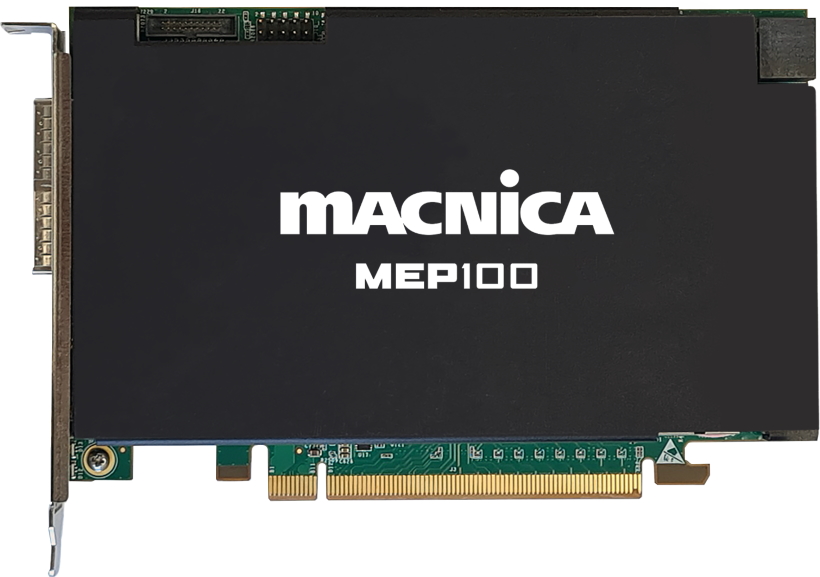
Macnica will showcase new capabilities for its MEP100 SmartNIC at NAB Show 2026 (Booth N1167), introducing support for both 100GbE and 25GbE media flows on a single card, along with expanded support for GPU-based processing, Windows-based applications and real-time metadata. These enhancements give broadcasters and product developers greater flexibility to scale SMPTE ST 2110 IP workflows based on channel density, infrastructure and application requirements, while integrating more easily into modern software-driven environments. “Never before has this kind of flexibility been offered in a SmartNIC,” said Andrew Starks, Director of Product Marketing, Macnica. “Our customers are not locked into a single network speed, and we are continuing to expand the platform to better support GPU processing, software-based production tools and emerging workflow requirements.”
The addition of dual-speed support reflects a shift in how modern broadcast and media workflows are designed. Rather than committing to a fixed infrastructure, developers can align network bandwidth with application-specific channel requirements, while maintaining a common hardware platform across deployments. At 25GbE, the MEP100 supports workflows such as graphics generation, video server playout, including applications leveraging low-latency JPEG-XS compression. At 100GbE, the same card enables high-density, uncompressed workflows for switching, multi-channel processing and large-scale live production environments.
In addition to expanded network flexibility, the MEP100 introduces enhanced support for GPU-accelerated workflows through GPUDirect, enabling efficient transfer of media streams into GPU memory for processing. On Windows platforms, new DirectShow filter support allows integration with applications such as vMix, simplifying adoption within existing production environments. The platform also adds support for SMPTE ST 2110-41 Fast Metadata, enabling the transport of time-aligned metadata alongside video and audio streams. “These additions are part of a continued effort to make ST 2110 workflows more accessible to software-based production and processing environments,” said Starks. “It’s about giving developers and end users practical ways to build and scale systems using familiar tools and modern compute platforms.”
Macnica’s MEP architecture enables creative professionals, particularly those working in Mac-based environments, to more fully participate in live IP production workflows, bridging the gap between post-production tools and real-time broadcast systems. The enhanced capabilities extend to emerging workflows using Apple ProRes 422 within ST 2110-22 environments, as well as GPU-accelerated and metadata-driven applications.
Built on Macnica’s Altera FPGA-based architecture, the MEP100 provides hardware-accelerated processing of ST 2110 streams, including support for 2022-7 seamless protection switching, PTP synchronization, GPUDirect-based data transfer and kernel bypass for efficient movement of media into application or GPU memory. This approach reduces CPU load while supporting deterministic, real-time performance.